A sensor result means little without its conditions — what the target was, what else was in the air, how the trial was run. So we publish each test with its scope and never roll it up into a headline accuracy figure. These are ADVENT’s own verification results, not accredited third-party certificates.
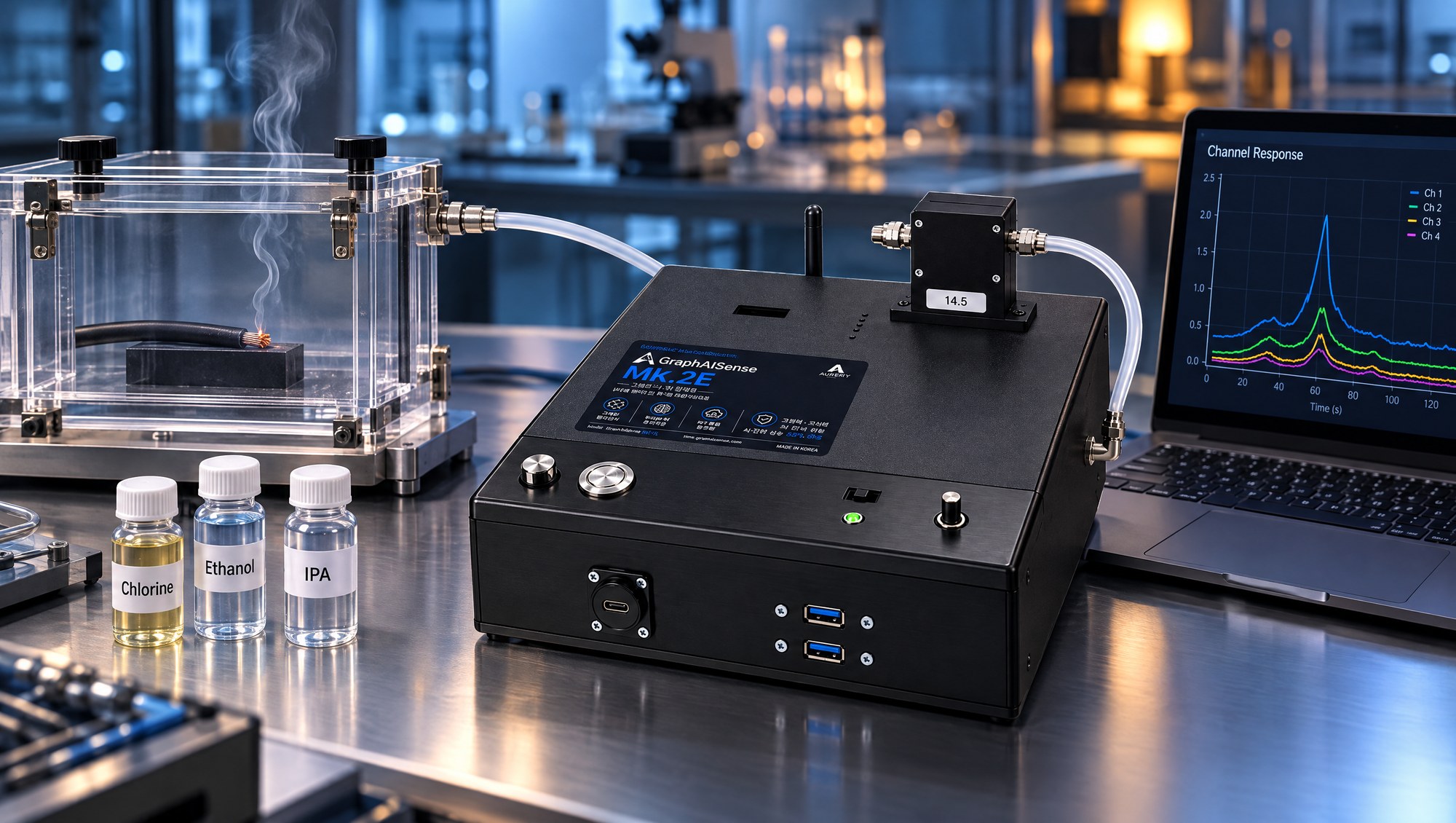
Odour data cannot be scraped. Every trial below produced data that would not exist if an instrument had not been placed in a real location.
Field trials run with GraphAISense instruments — the raw material every Model Pack is trained from.
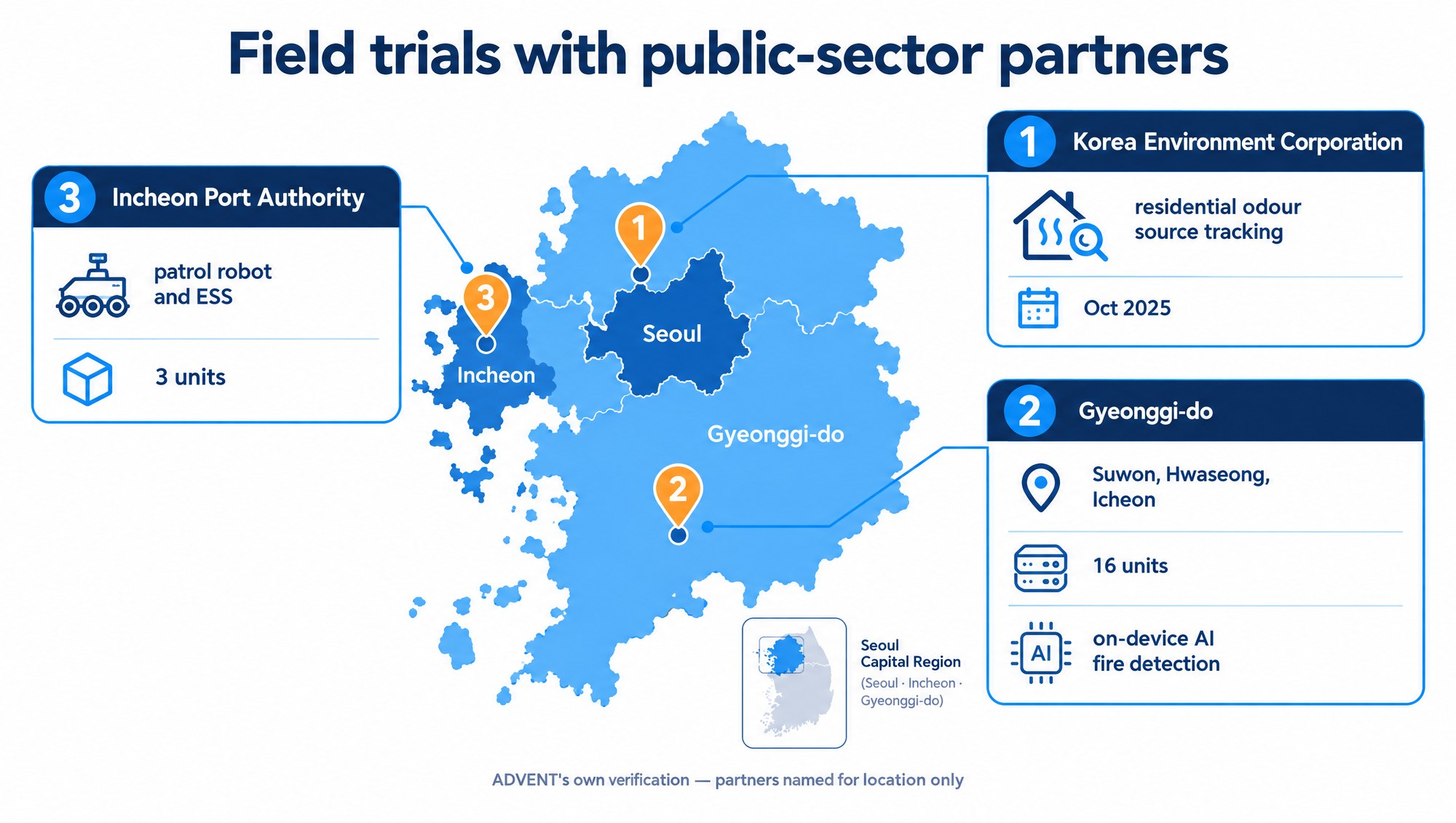
Public-sector field trials with Korea Environment Corporation, Gyeonggi-do and Incheon Port Authority.
Instruments deployed in public trials: 16 across Suwon, Hwaseong and Icheon, and 3 at Incheon Port.
An electrical fault announces itself chemically before smoke or heat. The question was not whether it is detectable, but whether the instrument can tell the precursor apart from the ordinary chemistry of an industrial room.
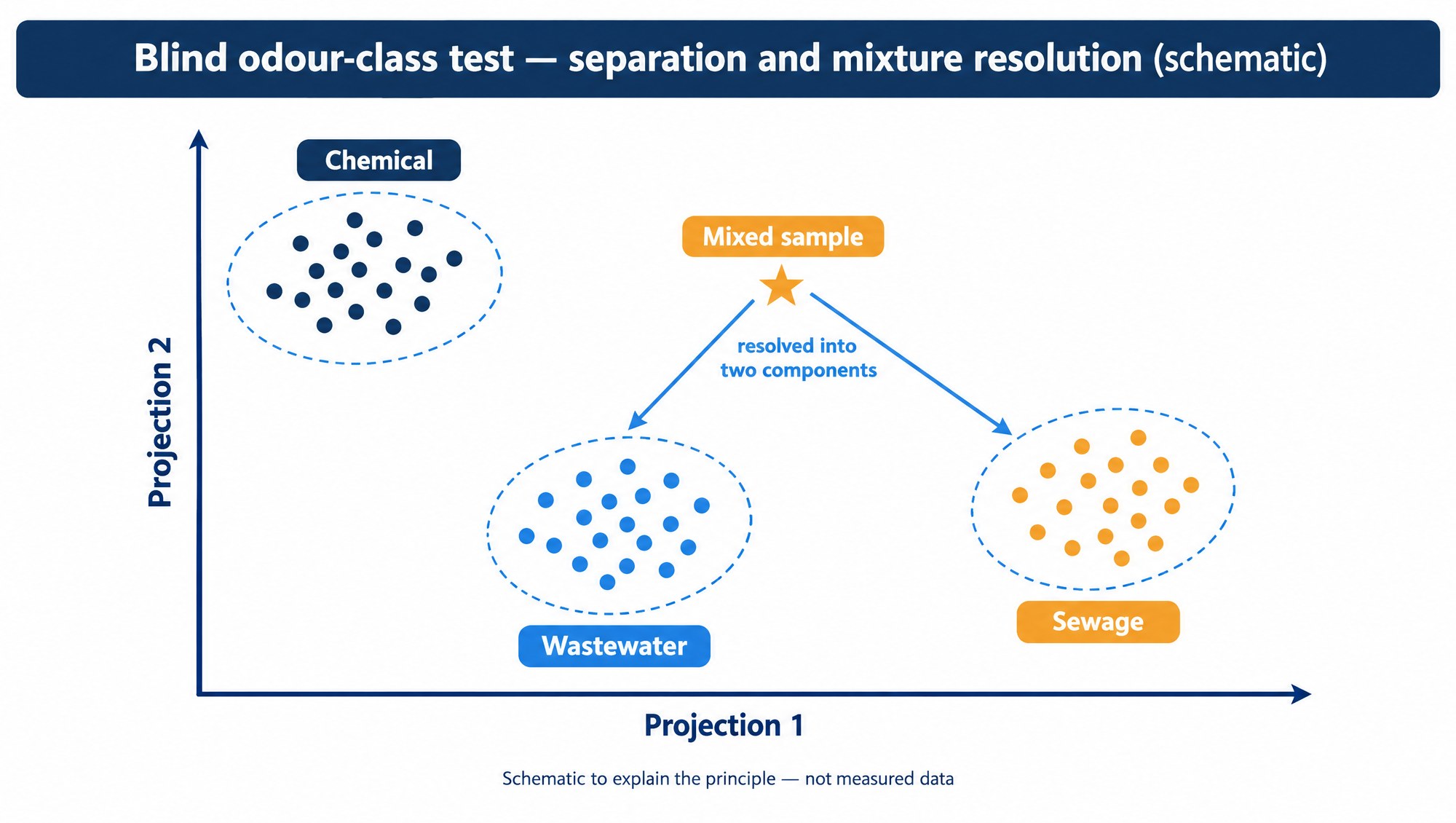
Real sites rarely emit one odour at a time. Before a reading can be acted on, classes have to separate reliably — including when they arrive mixed.
The organisations below opened their sites and helped set the test conditions. They are collaborators, not customers.
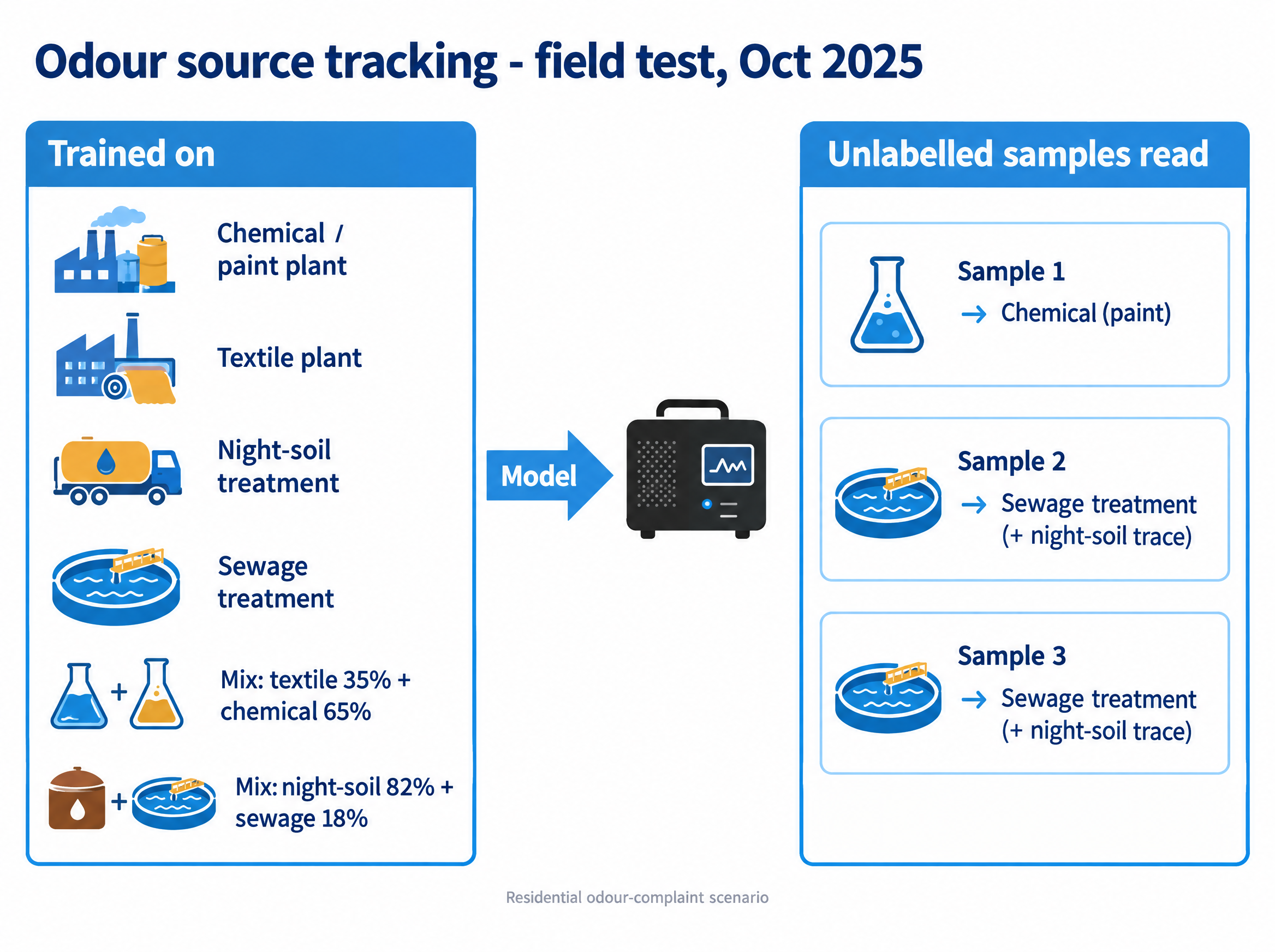
Trained on four source odours and two mixtures, then traced three unlabelled samples back to their sources. Signed a performance-sharing agreement for environmental applications.
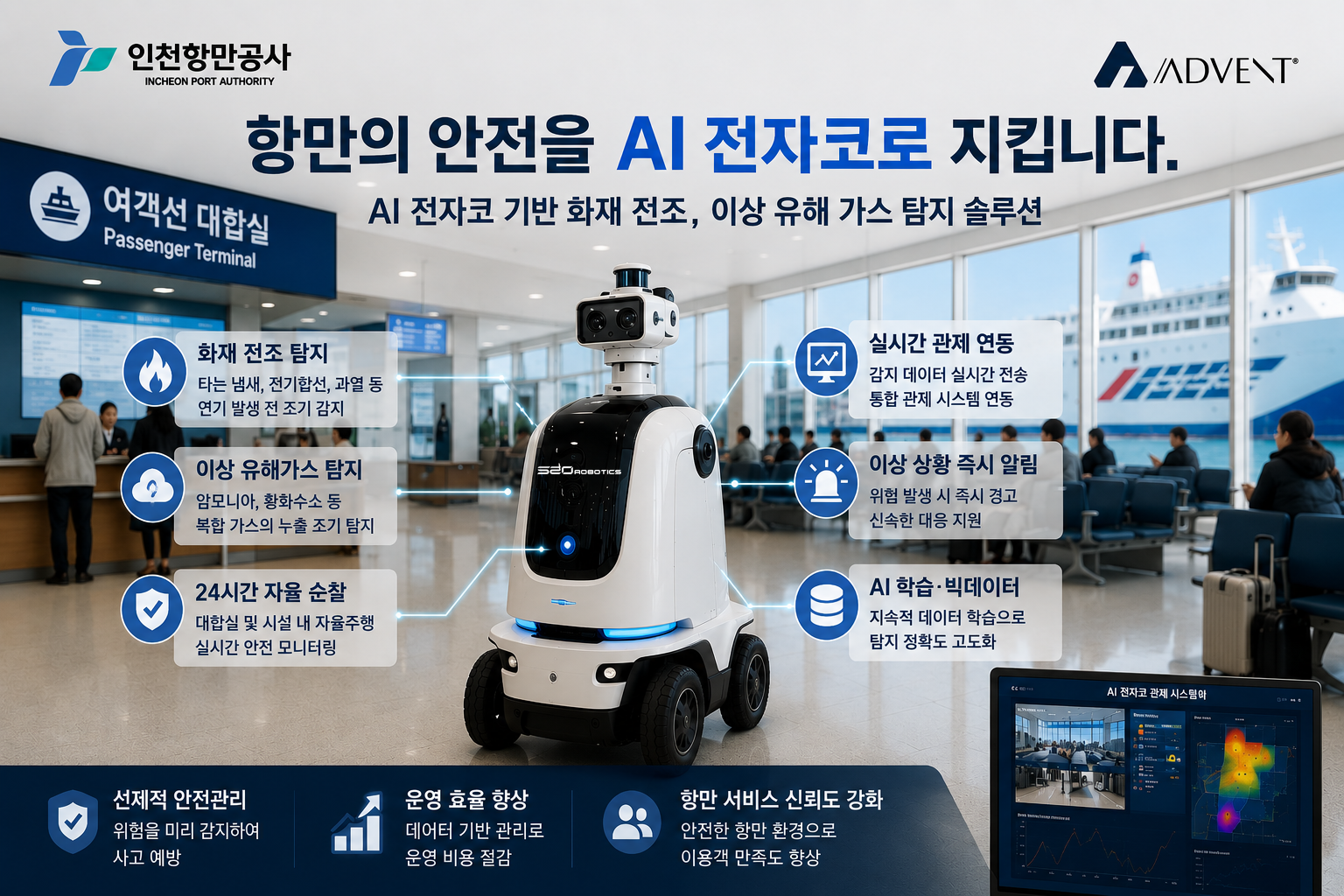
Three units: an e-nose built into a SEO Robotics patrol robot in the port passenger terminal, plus fixed units at energy-storage facilities, linked to monitoring over MQTT.

Sixteen units across Suwon, Hwaseong and Icheon — industrial complexes, traditional markets and public car parks — combined with AI CCTV in outdoor enclosures.
Bio & medical · research stage
We are preparing stool detection for critical-care settings such as ICUs, where recognising by odour that a patient has soiled lets nurses respond sooner. The next step is breath testing — analysing volatile compounds in exhaled air. This is research stage; GraphAISense is not a medical device or a diagnostic product.
Partners are named only to record where trials run. Naming does not imply endorsement, and these are not purchase or delivery records.
We would rather publish fewer numbers than numbers that cannot be checked.
A figure without its target, interferents and trial design is not a result. If we cannot publish the conditions, we do not publish the number.
One scenario does not become an instrument-wide claim. Our 98% figure is per-scenario verification, not a blanket rate.
These are our own tests. Accredited testing (KTL, KOLAS-certified) is in progress; when a certificate exists we will name the body.

We give AI the sense of smell.
GraphAISense is the product brand. ADVENT is the maker.
Headquarters #909, 28 Digital-ro 33-gil, Guro-gu, Seoul
R&D Center #420, 237 Yangji-ro, Sosa-gu, Bucheon-si, Gyeonggi-do
Plant 144-6, 3·1manse-ro 281beon-gil, Jangan-myeon, Hwaseong-si, Gyeonggi-do
ADVENT USA · US sales 8 The Green #22818, Dover, DE 19901, USA
Business registration 522-81-03199 · CEO Choi Chang-hee
Performance figures are ADVENT’s own verification results under the stated conditions; they are not accredited third-party certificates and must not be generalized as overall accuracy.
GraphAISense is a complementary monitoring channel. It does not replace statutory fire protection systems, legally mandated measuring instruments, or a battery management system.
Healthcare and care applications are at research stage. GraphAISense is not a diagnostic product.