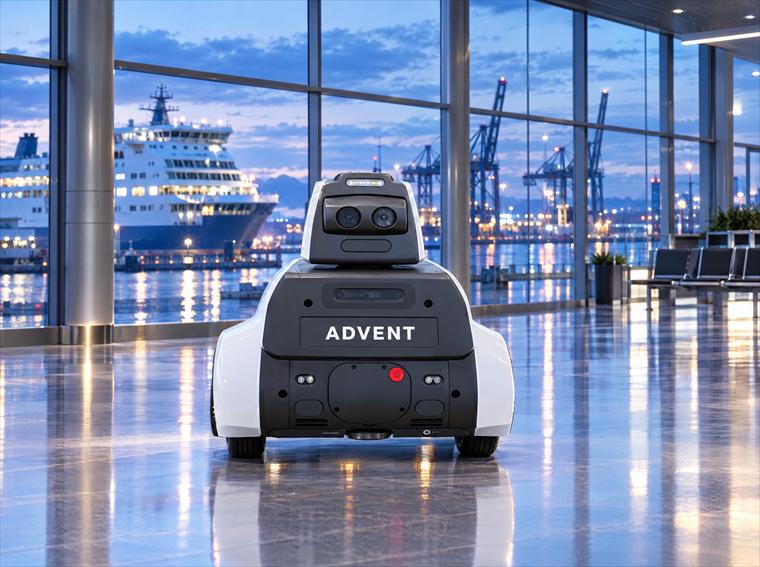
Patrol robot olfaction
Field trial- Where
- Indoor patrol routes
- Target
- Abnormal gas and odour events
- Result
- Odour logged with location and video
 Graphene AI e-nose
CATALOGUE 2026
Graphene AI Electronic Nose
GraphAISense MK.2E
An always-on AI electronic nose that identifies the odour fingerprints from a graphene multi-sensor chip with edge AI.
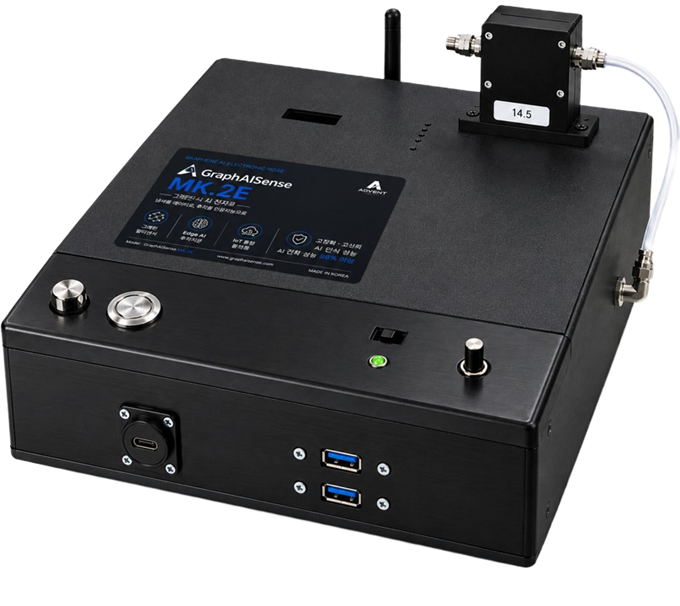
Performance is validated for each target substance and site condition.
What is an e-nose
The human nose tells odours apart by the combination of hundreds of olfactory receptors responding at once. An AI electronic nose applies the same principle: many sensors together create an “odour fingerprint”, and AI identifies it.
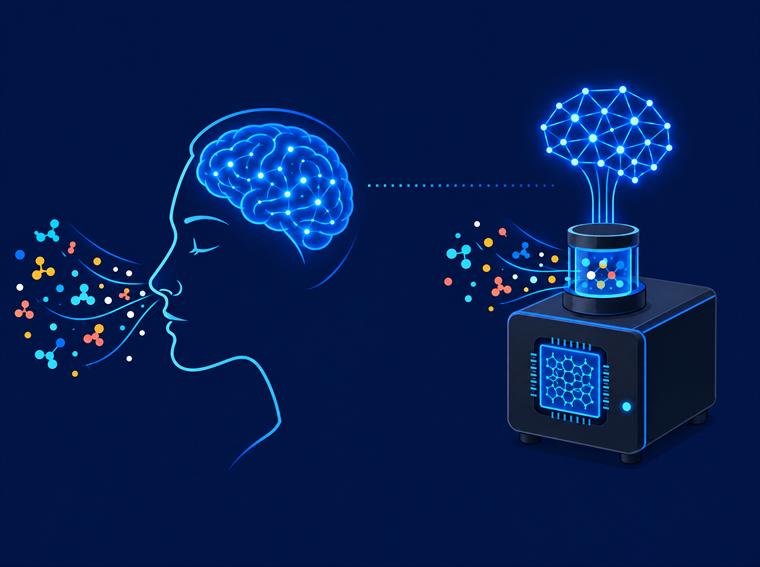
| Step | Human nose | AI e-nose |
|---|---|---|
| Take in | Breathes in | Built-in pump draws in air |
| React | Hundreds of olfactory receptors respond | 30–38 graphene sensor channels respond |
| Decide | The brain recognises the combination | Edge AI identifies the pattern |
| Remember | Learns odours through experience | Learns through the odour DB and Model Packs |
An e-nose is a pattern-recognition instrument, with a different purpose from an analyser that measures the absolute concentration of a specific gas. ADVENT designs and makes the sensor from graphene in-house, and the decision is made by edge AI inside the device.
How it works

Concept view of the graphene multi-sensor chip. Each cell responds differently to molecules.
A built-in pump draws in air continuously at 0.2–1.5 L/min.
30–38 channels each respond differently, creating an odour fingerprint.
The substance and alarm state are decided right on the device.
The same 38 channels draw a different shape for each odour. AI reads that shape to tell substances apart.
Odour A
Odour B
Schematic to explain the principle, not measured data.
State is set by the count of consecutive recognitions, not by one momentary response.
Events are sent the moment the state changes. If the link drops, they are stored on the device and resent automatically on reconnection.
EN-MSC.3EGraphene multi-sensor chipDesigned and made in-house. 38-channel chemiresistive replaceable chip, 1-year lifeOn-deviceEdge AI recognition engineDecides on site without a network. Lightweight model, no GPU requiredIoT / IIoTStandard monitoring integrationEthernet · LTE (option), MQTT · REST · WebSocket · OPC UAE-Nose vs Gas Sensor
Odour is the earliest signal of accidents, fires and spoilage.
| Item | Gas sensor | AI e-nose |
|---|---|---|
| Principle | One sensing film reacts to one specific gas | 30–38 channel graphene sensor array reacts at once |
| Output | One concentration value | Multi-dimensional odour fingerprint (per-channel resistance pattern) |
| Decision | Only whether a set threshold is exceeded | Edge AI identifies the substance + 3-level alarm state |
| Mixed odours and gases | Hard to separate due to cross-reactivity; causes false alarms | Learns the mixture pattern itself |
| Unseen odours | Mistaken for a known gas, or no response | Separated and reported as Unknown/OOD |
| When detected | After concentration reaches the alarm level | From precursor patterns before smoke or flame |
| New targets | Add a sensor for each gas | Add a Model Pack to the same device |
| Output and integration | Mainly alarm contacts and concentration values | Recognition, alarm and device state + standard protocols |
One device tells you what is leaking or burning, and the alarm keeps working even if the network drops.
Sensing, AI recognition and on-site alarms all complete inside the device, and only the necessary events go to monitoring.Use cases
Tap a field to see the 12 use cases.
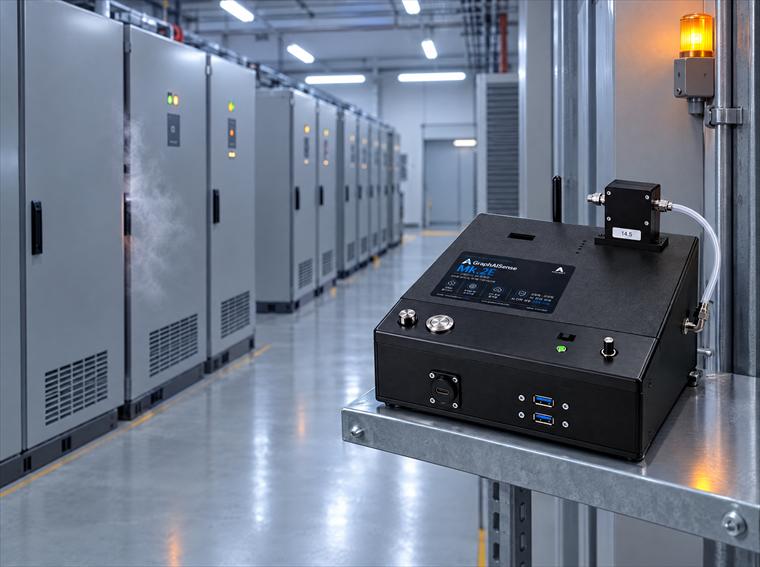
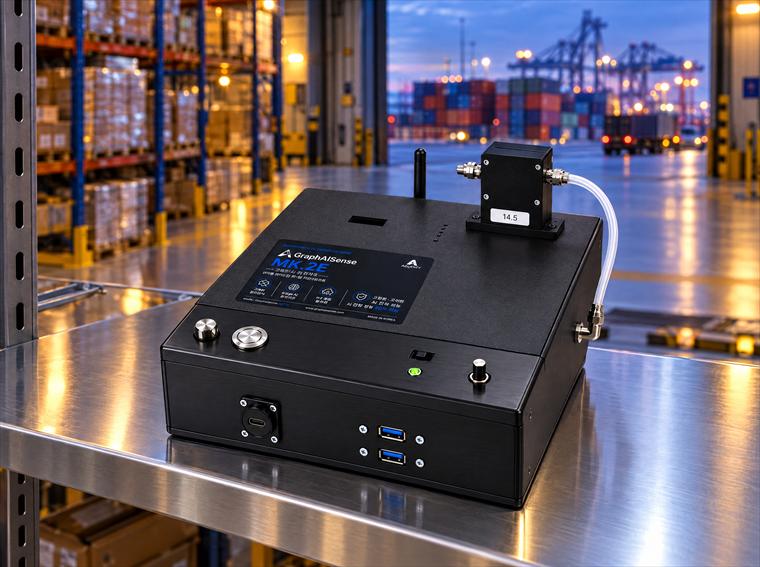
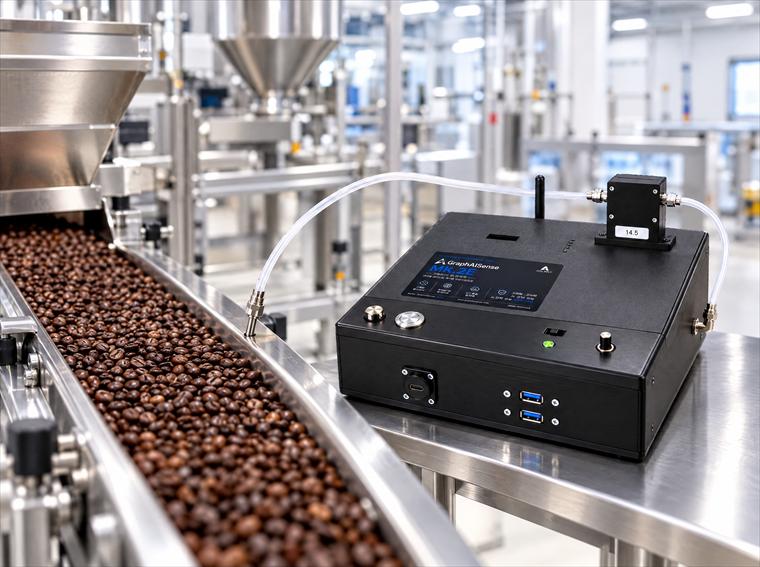
Recognition performance is validated per Model Pack by target substance, background interference, concentration range and site conditions.
Site data training keeps widening the range of application.
Platform
Data from patrol robots, industrial equipment and processes, and urban and public facilities forms a physical AI olfactory data platform.

The more data accumulates, the wider the recognition range. As cameras handle sight and microphones hearing, ADVENT is building the olfactory data standard for robots and AI systems.
Specifications
Designed for continuous operation in security, safety and industrial settings.
Ammonia (NH₃) · hydrogen sulfide (H₂S) · carbon monoxide (CO) · hydrocarbons (CH₄ etc.) · alcohol vapours · ketones · aldehydes
Smouldering gas · fuel vapour (gasoline, diesel, kerosene) · industrial gas odorants (mercaptans etc.) · alcoholic beverage vapour · wastewater evaporation · fragrances · liquid narcotics and e-cigarettes
About ADVENT
ADVENT Co., Ltd. began in graphene nanomaterials research. We design and make graphene multi-sensor chips in-house, and with edge AI and our own olfactory database, provide continuous monitoring where the human nose cannot reach.
Contact
We can help with site consultations, proof-of-concept partnerships, custom Model Packs for target substances, and technical materials.
We give machines the sense of smell.
© ADVENT Co., Ltd. Specifications may change for improvement. Some site photos and illustrations are staged or AI-generated for explanation.